

Author: Doug Johnstone, Principal Consultant at Digital Pivot
Date: September 2025

Outline
- Why misaligned services cause stagnation, however small adjustments can reopen growth
- How shifting client priorities widen the “value gap” over time
- The importance of realigning your service offerings to meet today’s client expectations
- Use insights from client conversations and frontline teams to identify needed changes
- Introduce quick-win adjustments to demonstrate immediate value
- Tailor services to align with clients’ evolving value chains and business outcomes
- Pilot new or revised services before a full rollout to test effectiveness
- Update marketing collateral and proposals to emphasise outcome‑focused value propositions
Introduction
Over the past 30 years I’ve helped everyone from scrappy, small consultancies to global telcos overhaul their go-to-market strategy. Time and again I’ve watched revenue stall- not because the team suddenly forgot how to sell, but because the offer itself slid out of sync with what clients now value. That quiet drift between what you deliver and what buyers will happily pay for is what I call the Value Gap.
I’ve spent the last year inside Digital Pivot diagnosing that gap for multiple service providers and guiding them through our “Offering Pivot” framework. The lessons have been visceral: winner-takes-most markets punish complacency, while even modest course-corrections—rooted in real customer insight—can reignite growth in a single planning cycle. In this post I’m distilling those hard-won insights into a practical playbook you can apply right now, before the gap widens further and turns into a chasm.
The Value Gap Dilemma
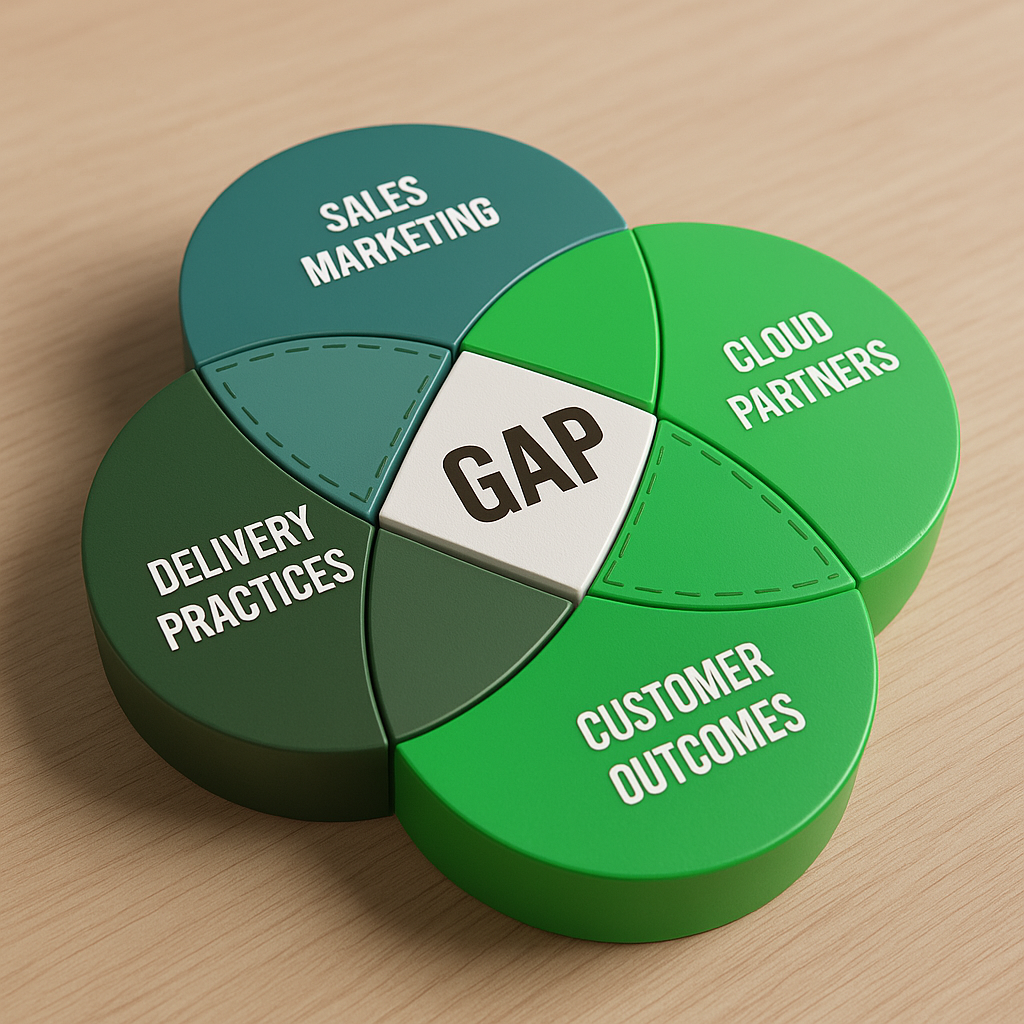
The ever-evolving nature of technology and digital business demands continuous adaptation from Professional Service providers. Yet many firms experience a “Value Gap”—a widening disconnect between their existing offerings and the changing needs of their clients. Left unchecked, this gap can lead to declining pipelines, eroding revenues, and diminished market relevance.
In this article, we’ll explore practical strategies to bridge the Value Gap, including ways to realign your services with new market demands. By taking a proactive approach to adjusting your offerings, you’ll position your organisation for sustained relevance and competitive advantage.
Understanding the Value Gap
- Shifting Client Priorities
- As AI and digital transformation accelerate, clients demand innovative, data-driven services that directly impact their bottom line. Sticking to outdated offerings creates a misalignment between your solutions and the outcomes clients truly value.
- Evolving Market Conditions
- Recessionary environments can drive cost-cutting, while rapid digital adoption opens entirely new opportunities. Missing these signals can weaken your competitive standing.
A clear grasp of this Value Gap is the first step toward closing it. By identifying precisely where your solutions fall short, you can begin mapping a pathway to higher-value service delivery.
Strategy 1: Conduct a Thorough Services Catalogue Review
- Assess Relevance: Examine each offering in light of current market needs. Identify where you can add value, and consider retiring or re-purposing solutions that no longer resonate.
- Collaborate with Sales Teams: Leverage front-line insights on market demand, client pain points, and competitive pressures. This feedback loop will help shape refined services.
- Prioritise Quick Wins: Start with services that require minimal tweaks to align with evolving needs, generating immediate impact on revenue and customer satisfaction.
A comprehensive review ensures you’re investing in services that truly meet the demands of a changing marketplace.
Strategy 2: Develop a Targeted Go-to-Market (GTM) Plan
- Focus on High-Growth Segments: Identify specific industries or client segments that stand to benefit most from your updated solutions. Tailoring your approach to these groups accelerates your market penetration.
- Create Outcome-Centric Messaging: Craft compelling value propositions that highlight measurable results—such as cost savings, revenue boosts, or risk reduction. This resonates with decision-makers, especially in challenging economic climates.
- Synchronise Marketing and Sales Efforts: Align campaigns, content, and lead-generation activities to present a unified front. Consistent messaging ensures prospects have a clear understanding of your unique value.
A targeted GTM strategy transforms your updated portfolio into real market traction and revenue growth.
Strategy 3: Innovate Through Rapid Prototyping
- Test and Validate Quickly: Use pilot programmes or limited rollouts to gauge client response to new or revised services.
- Iterate Based on Feedback: Collect performance metrics and client insights to refine your solutions in real time, staying agile in a fast-paced environment.
- Encourage Internal Collaboration: Involve cross-functional teams—sales, delivery, marketing—when rolling out prototypes. This fosters an organisational culture that embraces continuous improvement.
By treating innovation as an ongoing process, you remain ready to address changing client demands ahead of your competitors.
Strategy 4: Align with Customer Value Chains
- Map the Client Journey: Understand how clients operate and what pain points they encounter at each stage of their business processes.
- Position Your Offerings Strategically: Pinpoint the exact touchpoints where your services can deliver maximum impact, tailoring solutions to specific challenges.
- Leverage Partnerships: Collaborate with complementary vendors to form joint offerings that solve broader business problems for clients.
Aligning your services with the entire value chain demonstrates deep customer understanding, strengthening loyalty and trust.
Strategy 5: Deploy Battle-Tested Sales Collateral
- Highlight Commercial Impact: Present tangible ROI metrics and success stories that illustrate the financial benefits of your revised offerings.
- Emphasise Unique Business Value: In a crowded market, differentiate by clearly articulating how your solutions address industry-specific or functional challenges.
- Keep Content Fresh: Regularly update brochures, case studies, and whitepapers to reflect the newest insights and real-life examples of success.
With compelling, outcome-focused sales collateral, your team can effectively communicate the improvements you’ve made to bridge the Value Gap.
For more information, contact us
Key steps to pivoting your offerings into growth markets: